
.avif)
This article is updated as new publicly documented Digital Product Passport implementations are announced. Last updated: October 2026.
Digital Product Passports are already being implemented across fashion, luxury and accessories. Brands are connecting physical products with digital information concerning materials, production, supply chains, care and services available after purchase.
Current projects vary significantly in scope. Some brands, including Dondup and Nanimarquina, already cover every product they place on the market, while others begin with selected products, collections or categories before moving towards a broader rollout.
Below, we look at which brands are already using Digital Product Passports, how they are implementing them and what these projects show about the wider direction of the fashion industry.
This article provides a selection of publicly documented Digital Product Passport implementations and related initiatives. It is not an exhaustive list: brands not included may already be developing or implementing similar projects. Renoon may also be aware of initiatives that have not yet been publicly disclosed and therefore cannot be included. Inclusion does not indicate compliance with future DPP requirements, as the product-specific rules for fashion and textiles have not yet been finalised.
The European Commission defines the Digital Product Passport as a digital record connected with a physical product that makes relevant information accessible throughout its lifecycle.
Under the Ecodesign for Sustainable Products Regulation, Digital Product Passport requirements will be introduced through product-specific rules. Textiles and apparel are among the priority product groups, although the final mandatory dataset, applicable granularity, access rights and implementation timeline still need to be established through the relevant delegated act.
For fashion brands, preparing a DPP involves more than creating a customer-facing page. It requires companies to structure product and supply-chain data, establish internal responsibilities, involve suppliers, connect existing systems and determine how information will be associated with products and maintained over time.
Brands implementing DPPs today are already testing these operational processes while exploring how the same infrastructure can support transparency, customer experience, care, repair and other product-related services.
Tod’s has brought Digital Product Passports live on Tods.com for iconic styles from its Gommino loafer collection.
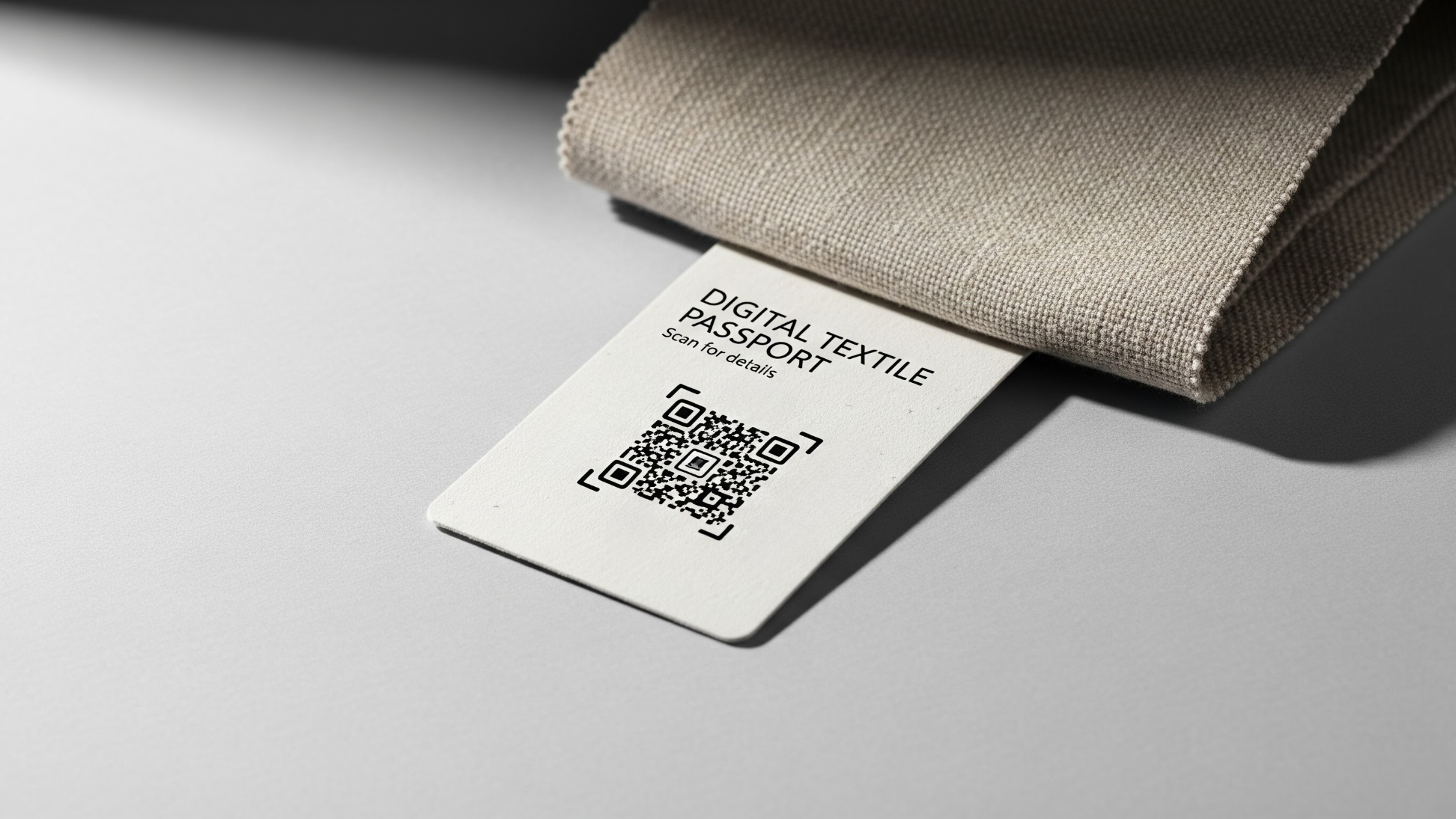
Developed with Renoon, the passport makes information about materials, production processes, locations and company certifications accessible directly from the product page. Customers can also access the information through QR-coded cards associated with the physical products.
The project represents the first phase of a broader rollout. The underlying infrastructure has been designed to accommodate additional products, data points and supply-chain stages over time.
The implementation shows how a Digital Product Passport can become part of the online purchasing experience while establishing a structure that can be progressively extended across the brand’s product portfolio.
Dondup has implemented Digital Product Passports across all products it places on the market, with more than 2.4 million products already covered across multiple collections.
The project initially focused on making information about products, Made in Italy and the supply chain more accessible. Over three years, the DPP has become part of a structured process involving sustainability, production and e-commerce teams.
The same product-level layer now supports information connected with different compliance requirements, including the future European DPP framework, French AGEC obligations and environmental labelling.
The passports developed with Renoon are also connected with Dondup’s e-commerce and CRM activities. Customers can discover related products, register their purchase and enter a direct relationship with the brand through dedicated communications, invitations and early access.
ARMEDANGELS reports that all garments from Spring 2025 include a scannable QR code providing access to Digital Product Passport information.
The brand currently makes nine data points available, including composition, certifications, care instructions, manufacturers and subcontractors, material suppliers, production country, recycled content, recyclability and microfibre presence.
ARMEDANGELS also plans to expand the information available as further supplier, circular-design and product-level carbon data become available.
The rollout illustrates how a customer-facing DPP depends on the wider process of mapping products, suppliers and production stages.
Coachtopia connects products with individual digital passports through embedded NFC chips and, across several categories, QR codes.
The passports contain information about materials, product impact and Made Circular design details. The digital record can also be updated when events such as repair, trade-in or recycling occur.
Customers can connect products to their accounts, access circular services and transfer the relationship with the item when it is passed to another owner.
The project shows how a digital passport can evolve with a product and continue supporting information and services after the first sale.
Mugler has introduced Digital Product Passports for selected handbags, connecting individual products with digital information and brand-provided content.
The project demonstrates how a product-linked digital experience can create a persistent point of contact between the brand, the product and its owner.
LVMH has been progressively deploying Digital Product Passports across selected Maisons and products.
The Group describes passports containing information about raw-material origin, environmental impact, production locations, use, repair, reuse and recycling.
In 2025, Bvlgari, Loro Piana and Louis Vuitton began rolling out Digital Product Passports with the support of the Aura Blockchain Consortium. The Group has stated that the implementation will be progressively extended.
This shared approach shows how common infrastructure can support different product categories and Maison-specific customer experiences while maintaining consistent principles for product information and traceability.
Alongside projects explicitly presented as Digital Product Passports, fashion brands are also introducing digital IDs, digital twins and digital certificates connected with individual products.
These initiatives already anticipate some DPP principles, including persistent product identification and access to information or services throughout the product lifecycle. However, they cannot automatically be considered compliant Digital Product Passports. Once product-specific requirements apply to their category, products placed on the EU market will need a DPP that meets the applicable rules on data, identification, access rights, interoperability and registration. Existing digital identity systems may provide a useful foundation, but they will need to be assessed and adapted against the final requirements.
Dior linked the first limited-edition release of its B33 sneakers to digital twins. The 470 pairs included NFC-enabled access to a digital certificate of authenticity and a non-transferable digital twin, alongside dedicated online services.
The project demonstrates how a physical luxury product can be connected with a persistent digital identity.
Chloé introduced Digital IDs for eligible products as part of its collaboration with Vestiaire Collective.
The Digital ID and certificate of authenticity facilitate instant resale through a simplified, pre-filled listing process. Customers can receive credit to use on Chloé or Vestiaire Collective or choose to donate the corresponding amount to UNICEF.
The initiative shows how a product-level digital identity can reduce friction between the first sale and subsequent ownership cycles.
Digital Product Passports are also being implemented in industries characterised by complex products, long lifecycles and ongoing relationships between manufacturers, products and owners.
Poltrona Frau launched Digital Product Passports in 2026 for its Vanity Fair and Archibald seating collections. Through an NFC tag uniquely associated with each product, customers can access information about materials, raw-material origin and production stages, download a Certificate of Ownership, view care and maintenance content and access after-sales services. The company plans to extend the implementation progressively across its catalogue by 2030.
Nanimarquina has introduced Digital Product Passports across its entire rug collection in partnership with Renoon, meaning that every product the company places on the market is already covered by a DPP. Each passport contains information about material origin, artisanal production, environmental footprint, maintenance, care and circularity. It can be accessed through the product page, a QR code on the back of the rug or the QR code included in its Certificate of Authenticity.
Axopar introduced an individual Digital Product Passport for all new boats produced from the first quarter of 2026. Connected through an NFC chip, the passport brings together factory specifications, certificates, warranty information, inspection records and maintenance guidance. It also supports ownership transfer when a boat is resold.
These examples show how Digital Product Passports can support product information, ownership, maintenance and after-sales services across categories beyond fashion.
Looking across these projects, several implementation patterns emerge.
Brands are using QR codes, NFC chips and integrations within e-commerce product pages to connect physical products with their digital records.
The appropriate level of identification varies by project. Some passports operate at model or batch level, while others create a unique record for each individual product.
Digital Product Passport information may be distributed across PLM, ERP, PIM, traceability systems, e-commerce platforms, supplier documents and internal files.
Implementation requires a data structure capable of associating the right information with the correct product and maintaining it over time.
Information about materials, production stages, locations and certifications often depends on external suppliers.
Supplier onboarding and data-quality processes therefore become increasingly important as a project expands beyond an initial product selection.
The most developed implementations connect DPPs with production, labelling, e-commerce, CRM, repair, resale and customer service.
This allows the passport to support multiple functions while reducing the need to manage separate product-information flows.
The product-specific requirements for fashion and textiles have not yet been finalised. Current implementations therefore need to accommodate additional data points, access rules and technical requirements as they are defined.
A scalable DPP project requires a data model and operating process that can evolve across new collections and regulatory developments.
The brands already implementing Digital Product Passports are following different starting points. Some focus initially on transparency and traceability, while others begin with authentication, customer experience, repair, resale or regulatory preparation.
Across these projects, the underlying work is increasingly similar. Brands need to:
Digital Product Passports are already being applied across different segments of the fashion industry, from apparel and accessories to footwear and luxury goods.
As product-specific European requirements are defined, brands with structured data, clear internal responsibilities and established implementation processes will be in a stronger position to incorporate the final requirements across their collections.
Renoon supports fashion and luxury companies across this process, from regulatory preparation and data-model definition to supplier onboarding, system integration, data-carrier management and Digital Product Passport rollout.
Talk to our team about your Digital Product Passport implementation.

.avif)
.avif)
.avif)